WEEKLY SITUATION REPORT
Date: June 15, 2026 Regions: Middle East (Lebanon, Israel, West Bank, Gaza, Syria) | South Asia (India) Reporting Organization: Vulnerable People Project (VPP)

Executive Summary
In the span of seven days: Iran fired ballistic missiles at Israel and declared its operations over; a seven-month-old boy was shot dead in Hebron by an IDF soldier; settlers burned at least nine fields and olive groves across the West Bank in a single coordinated day of arson, then set a Christian village on fire and advanced on Bethlehem to stone cars under army protection; Israel warned Christians in southern Lebanon they would be bombed if they sheltered Muslim neighbors; the Vatican’s Apostolic Nuncio was stopped by Israeli tanks on a humanitarian mission to a Christian village; and the United States and Israel launched formal talks to make their military alliance permanent and integrated.
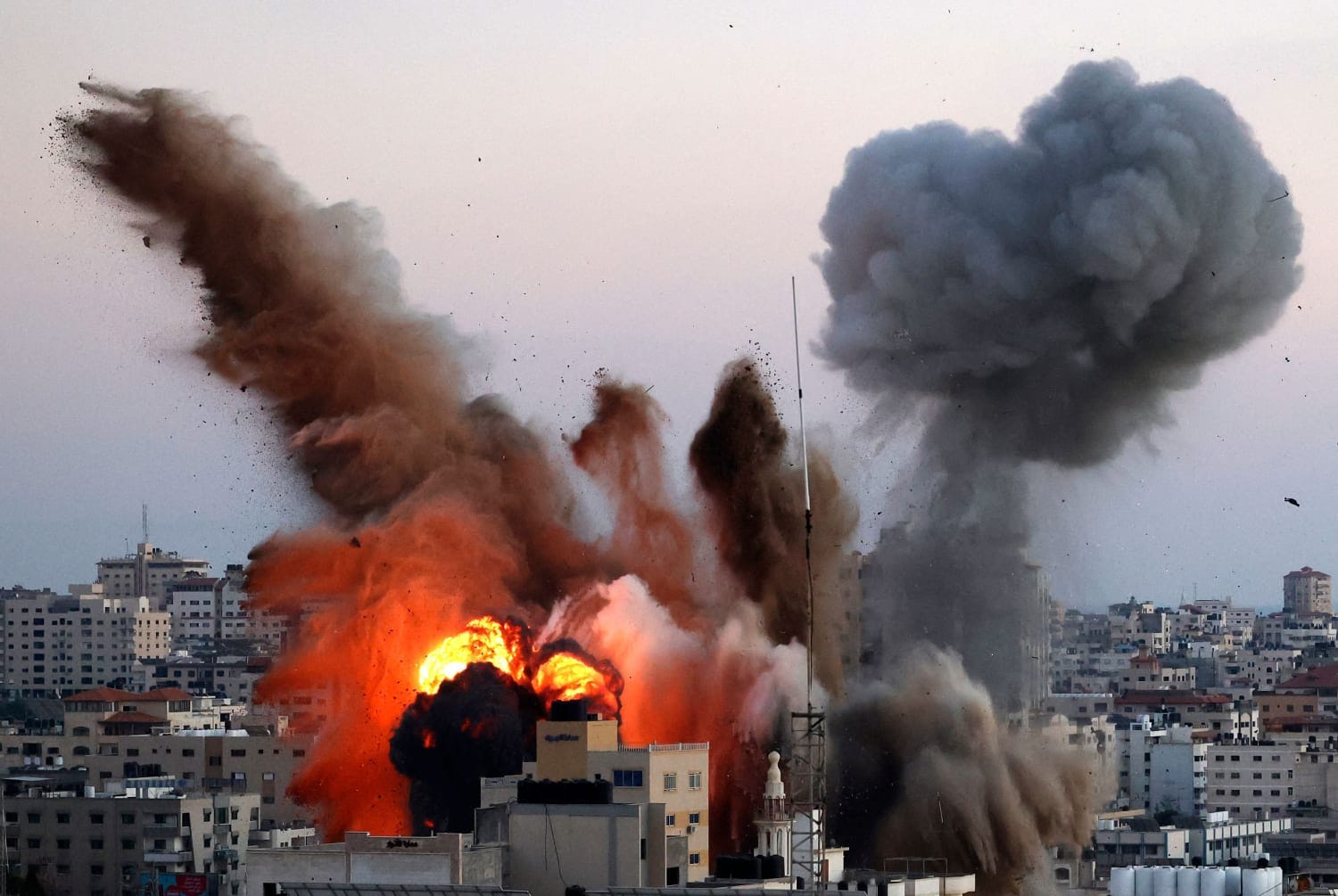
Lebanon is the hinge on which a wider regional war turns or doesn’t — and this week it nearly broke. On June 14, Netanyahu struck Beirut’s Dahiyeh district on the day Trump said the Iran deal could be signed. Trump’s response, reported by Axios and the Times of Israel, was unambiguous: he told Netanyahu he had “no judgment,” called him “crazy,” warned that the deal would have been signed already were it not for the strike, and told the Israeli leader — in language described by multiple outlets as expletive-laden — “you’d be in prison if it weren’t for me.” He declared the IDF should be barred from striking anywhere in Lebanon. Ben Gvir responded on social media by publicly instructing Netanyahu to tell Trump “no” — and Netanyahu’s defense minister confirmed military operations would continue “as planned.” This is the state of the U.S.-Israel alliance in June 2026: the American president threatening his ally with imprisonment while the ally’s coalition ministers instruct him to defy Washington in public. Lebanon’s Prime Minister has confirmed 3,491 Israeli air raids and 3,526 Lebanese killed since the April 17 ceasefire. The “Gazafication of Lebanon” is no longer a warning. It is being conducted in open defiance of the President of the United States.
Christians in particular have fallen under attack this past week. Israeli settlers set Taybeh — the West Bank’s last entirely Christian village — on fire across two consecutive nights, with firefighters blocked by settlers and temporarily halted by IDF forces. Then settlers advanced on Bethlehem, the birthplace of Christ, throwing stones at cars under army protection. In Lebanon, the Vatican’s Apostolic Nuncio, Archbishop Paolo Borgia, was stopped by Israeli tanks while leading a 25-truck humanitarian convoy to a Christian village on a UN-coordinated route. This follows Cardinal Pizzaballa being blocked from the Church of the Holy Sepulchre on Palm Sunday — the first time in centuries — and being required to personally intervene to allow a permitted Marian Festival to proceed in Taybeh, where VPP was present. Avvenire, the official newspaper of the Italian Bishops’ Conference, ran the headline this week: “Christians, the New Enemies of Israel.”
In Gaza, the Government Media Office released its Day 245 ceasefire compliance report: 3,269 violations, 992 killed, 3,138 injured since the agreement took effect. Israel has met 36 percent of its humanitarian aid obligations and 35 percent of its travel obligations. Of 600 agreed aid trucks, 12 entered this week. The Rafah Crossing is closed, and eleven thousand cancer patients cannot reach treatment. The fuel that runs hospital generators is blocked. The week’s named dead include Zaki Mohammad Al-Qarra, 30, shot near a roundabout in Khan Younis; Amir Imad Al-Basheeti, shot dead while sleeping in a displacement tent; Mohammad Al-Namrouti and Hussam Al-Jabri, killed in an airstrike on civilians; Mohammad Ramzi Abu Hasira, 39, who succumbed to wounds; and a child shot and killed before his father’s eyes as Israeli forces abducted them both. In Israeli custody, Imad Sarhan, 48, died in Gilboa Prison after 25 years of detention and systematic torture — the 90th Palestinian to die in Israeli custody since October 2023.
In the West Bank, settlers attempted to burn Muslims alive in a mosque in Burqa, broke down the doors and set fire to the entrance while people were inside. In Deir Dibwan, vehicles were burned and farmland torched simultaneously. Israeli Defense Minister Gallant declared forces will remain in Gaza, Lebanon, and Syria “indefinitely.” Israeli officials stated publicly that Israel is not a “subordinate” of the United States. The UN Commission of Inquiry found this week that Israeli security forces and settlers have effectively merged — “a de facto collapse of the distinction between settlers and soldiers.” Amnesty International called it state-sanctioned ethnic cleansing. Six Western governments announced new sanctions.
Trump congratulated Modi on becoming India’s longest-serving Prime Minister the day after Indian Christians held a national protest rally and submitted a memorandum to India’s president documenting escalating persecution. The India-US Comprehensive Global Strategic Partnership does not include any mechanism for protecting them, and Christians are heavily persecuted without protections of any kind by our ‘close ally.’
A shocking report released this week finds that the Israeli military killed more civilians with explosive weapons in 2025 than every other armed force on earth combined. Across 65 countries, 22,616 civilians died from explosive weapons last year. Israel was responsible for 56 percent of them — not in a vast theater of war, but in a strip of land smaller than Detroit, against a population of two million people with nowhere to go. Ukraine is at war, Sudan is in genocide. Syria, Myanmar, Somalia — none of the figures from these conflicts come close. And it is being funded, armed, and diplomatically shielded by the United States.
Lebanon
Israel struck the Dahiyeh district of Beirut on Sunday June 15 — a densely populated southern suburb and Hezbollah stronghold — killing at least three people and wounding 15 others. The strike came on the day Trump said a deal with Iran to end the war could be signed. Trump’s response was immediate and unambiguous. “This morning’s attack on Beirut should not have happened,” he posted on Truth Social, “particularly on a special day when we are so close to a Peace Deal with Iran.” He demanded all sides stand down. In a separate conversation reported by Fox News correspondent Trey Yingst, Trump said he called Netanyahu and asked: “What the f**k are you doing?” He told Netanyahu not to conduct additional strikes.
Netanyahu’s stated justification was Hezbollah drone attacks into northern Israel, in which no casualties were reported. He declared Israel would continue operations in southern Lebanon regardless and threatened further Dahiyeh strikes if Hezbollah continued firing. Israel’s military simultaneously issued an Arabic-language evacuation warning to all residents of the Dahiyeh district — a notice that preceded what the IDF described as preparation for “massive strikes.”
Iran’s response was categorical. Parliament Speaker Mohammad Bagher Ghalibaf, who is also Iran’s chief nuclear negotiator, threatened to halt peace talks entirely: “The Zionists’ aggression against Dahiyeh once again showed that the United States either lacks the will to implement its commitments or lacks the ability to do so. If you lack the will and ability to fulfill your commitments, speaking of continuing the path is not possible.” Iran’s Foreign Ministry stated that “the responsibility for the dangerous consequences” of Israel’s actions “will lie” with the U.S. and Israel. Iran’s Supreme National Security Council warned a response was “forthcoming.”
Trump claimed Monday that negotiations with Iran were “continuing at a rapid pace.” Secretary of Defense Pete Hegseth said talks being mediated by Pakistan in Islamabad were still moving forward. Whether the deal holds now depends entirely on whether Israel strikes Beirut again — a decision Netanyahu has made clear he reserves the right to make unilaterally.
The week’s events in Lebanon exposed a structural fissure that has been building for months: the United States and Israel want incompatible things. Washington needs Israel to stop bombing Lebanon for the Iran deal to hold. Israel is bombing Lebanon. Trump has now said so publicly, in language that is not diplomatic. Netanyahu has responded by threatening more strikes. The result is the most visible rupture in the U.S.-Israel relationship in years — not over Palestinian rights or settlement expansion, which Washington has consistently declined to act on, but over Iran, where American strategic interests are directly at stake.
For Lebanon’s civilians, the distinction between a rupture and a realignment matters less than what is happening to their country. Since the April 17 ceasefire took effect, Lebanon has absorbed 3,491 Israeli air raids, 407 bombing operations, and 6 bulldozing operations. 3,526 Lebanese have been killed. 10,733 have been wounded. The “Gazafication of Lebanon” — the systematic normalization of tactics used in Gaza now applied to Lebanese civilian infrastructure — is not a warning anymore. It is an ongoing process.
Iran-U.S. Deal
The Iran-U.S. deal has been described as imminent, days away, hours away, and nearly signed — repeatedly, across multiple weeks, by Trump himself — without being signed. This week came closer than any previous week, and also came closer than any previous week to collapse.
The deal framework being negotiated in Islamabad under Pakistani mediation involves a halt to U.S.-Israeli military operations against Iran and Iran agreeing to nuclear constraints, enriched uranium disposal, and a cessation of proxy operations including in Lebanon. Iran has consistently insisted Lebanon is non-negotiable — any deal must include a halt to Israeli strikes on Lebanese territory. Israel has consistently refused to accept that condition. Trump has been caught between them.
This week the U.S. and Iran exchanged fire for a second consecutive night, with U.S. forces hitting targets across several Iranian cities while Tehran struck U.S. air bases in Bahrain, Kuwait, and Jordan. Trump warned Iran would “pay a price” if it failed to agree. He also privately threatened to bomb Kharg Island — Iran’s primary oil export terminal, the destruction of which would be a catastrophic economic blow. “They weren’t so thrilled when they heard that’s what I would have done,” he told reporters after suggesting the deal would take it off the table.
The Beirut strike Sunday threw the final stages of negotiations into crisis. Iran called it proof the U.S. cannot control its ally. Trump called it a mistake that should not have happened. Netanyahu said Israel would keep striking. As of Sunday evening, the deal had not been signed. Whether Lebanon costs it the deal or whether the deal eventually absorbs Lebanon is the question that will define the next week.
West Bank
Israeli occupation forces stormed the Al-Almaniya neighborhood in the city of Jenin overnight, the latest in a sustained campaign of military incursions into the northern West Bank. Jenin has become the focal point of what Israeli officials describe as counterterrorism operations but what the cumulative pattern of raids, home demolitions, bulldozing of infrastructure, and planned military camp construction increasingly resembles: the permanent military occupation of a city.
On the night of June 14, Israeli settlers rampaged through two villages east of Ramallah in an attack that crossed a threshold even within the already extreme pattern of settler violence this week.
In Burqa, a group of settlers infiltrated the village, set fire to a vehicle parked near Al-Nour Mosque, then broke down the mosque’s doors and set fire to its entrance — while worshippers were inside. The head of the Burqa village council confirmed the sequence: settlers broke in, lit the fire, and fled. The worshippers inside managed to extinguish the flames before they spread beyond the entrance. They were not injured. They escaped the building that was burning around them.
In the nearby town of Deir Dibwan, a separate group of settlers simultaneously stormed the Al-Marah area, set two vehicles completely on fire, and vandalized two others. Fires blazed across farmland surrounding the town.


]
The Palestinian Ministry of Foreign Affairs condemned both attacks as “organized terrorism against the Palestinian people.” The Israeli government has not announced any arrests.
This attack is significant beyond its immediate facts. Settlers have now, within a single week in the West Bank: set Taybeh on fire; advanced on Bethlehem and stoned cars; set nine fields ablaze in a single day of coordinated arson; attempted to burn a mosque with worshippers inside; and rampaged through a second village simultaneously. These are not isolated incidents occurring across months. They are a coordinated campaign concentrated into seven days — and they are being carried out with the impunity that comes from a decade of near-zero prosecution. — the West Bank’s last entirely Christian village, population 1,340, whose church dates to the fifth century and whose residents have lived on this land since the Canaanite period more than three thousand years ago.
On the evening of June 9, groups of settlers entered the area around Taybeh and set fire to agricultural land on the village’s outskirts, beginning at Jabal Al-Masis, opposite the fuel station. The fires spread across a large mountainous area containing farmland. Mayor Suleiman Khoury confirmed that residents heard gunfire in the vicinity — fired by settlers — which prevented them from approaching the site to extinguish the flames. The attackers remained at the scene until the arrival of Israeli army and police.
On June 10, settlers returned. They set agricultural fields ablaze, hurled Molotov cocktails at homes, attempted to burn the petrol station, and opened fire on residents. Smoke rose from a large area of burned hillside visible for kilometers. Fr. Bashar Fawadleh — the parish priest VPP met in Taybeh on May 29 — described settlers shooting firearms and surrounding people who attempted to bring a water tanker to the site to fight the fire. Palestinian Authority Civil Defense spokesperson Nael al-Azza confirmed that IDF forces also temporarily blocked firefighters from reaching the blaze while they “arranged security.” Palestinian firefighters were obstructed by settlers while attempting to extinguish fires burning the land their community depends on for survival.
Reuters visited Taybeh on June 11. Smoke was still rising from the hillside.
Fr. Bashar wrote his own account, published by Development and Peace on June 12: “Yesterday evening, Tuesday at approximately 8:30 p.m., we were subjected to yet another attack — one that was complex, alarming, and difficult to comprehend or justify. The events began with a fire being deliberately set across a large area of Jabal Al-Masis, opposite the fuel station.” He described the fear his community is living under, and the pattern that has made it permanent: “We do not live in peace but in daily fear and siege.”
The settlers responsible are rooted in Kahanism — the ideology of Rabbi Meir Kahane, which explicitly advocates the expulsion of Arabs from the land. New outposts established around Taybeh as recently as April 2026 have intensified attacks. In July 2025, masked settlers on horseback set fires near the fifth-century Church of St. George and its cemetery. U.S. Ambassador Mike Huckabee visited Taybeh after those attacks and called them “an act of terror,” demanding “harsh consequences” for the perpetrators. No consequences followed. The attacks this week were larger.
Having set Taybeh on fire, Israeli settlers then advanced to the entrance of Bethlehem — the birthplace of Jesus Christ — where they threw stones at passing cars under Israeli army protection.
The sequence must be read in its geographic and spiritual totality: Taybeh burned, then settlers moved on Bethlehem. This is not random mob violence. It is a directed campaign moving through the Christian geography of the West Bank — from the last entirely Christian village to the holiest Christian city in the world — with the Israeli military providing the conditions under which it can proceed without consequence. The UN Commission of Inquiry described it this week as “a de facto collapse of the distinction between settlers and soldiers.” Fr. Bashar described it from inside: daily fear and siege. Both are accurate. They are describing the same reality from different distances.
On June 14, Israeli settlers shot and wounded a 29-year-old Palestinian man with special needs at the entrance to the town of Duma in the occupied West Bank — in the presence of Israeli soldiers, who then handcuffed the wounded man’s hands and feet and detained him for over an hour. Local reports confirmed the attack was carried out by the owner of an adjacent Israeli settlement farm and another settler. Medical teams from the Palestinian Red Crescent Society were prevented from reaching the man for over an hour. He was shot in the abdomen, left foot, and right leg and taken to hospital in moderate-to-severe condition. Suleiman Dawabsha, head of the Duma village council, confirmed to Haaretz that the man has a mental disability and that soldiers were present throughout. A settler armed with a rifle separately stopped a Palestinian car in the nearby area of Shi’b al-Butm, and Israeli forces that arrived confiscated the driver’s car keys.
Israeli forces this week prevented residents of Deir Abu Mash’al village, west of Ramallah, from reaching their own agricultural lands, which have been seized by settlers. Footage of the incident circulated on social media, showing soldiers blocking Palestinian farmers from accessing fields their families have worked for generations.

The incident fits the pattern documented by the Oxfam report this week: 925 obstacles now permanently or intermittently restrict Palestinian movement across the West Bank — 43 percent more than the annual average of the preceding two decades. Farmers blocked from their land is not a dramatic incident. It is Tuesday in the West Bank.
Local Palestinian sources also reported this week that Israeli settlers are deliberately polluting water wells in the agricultural lands of the Khirbet Hamrush area, east of Sa’ir, north of Hebron. Video documentation circulated online. The deliberate contamination of water sources is not a new tactic — it has been documented across the West Bank as part of the broader strategy of making Palestinian agricultural life economically unviable. Poisoned wells, burned olive groves, blocked road access to farmland, and soldiers firing on farmers who approach their own fields: the tactics are different, the goal is identical. The Oxfam report confirmed this week that water pipelines have been repeatedly demolished across the West Bank as part of the documented displacement campaign.
The Duma incident describes, with precision, the institutional logic that has governed the West Bank throughout this conflict: settlers shoot, soldiers stand by, the wounded are handcuffed, the ambulances are blocked. The victim in this case has a mental disability and was shot three times. He was then detained by the soldiers who watched him be shot. No arrests of the perpetrators have been reported.
The institutional framework enabling this pattern was laid bare this week by a convergence of major reports. A new UN Commission of Inquiry found that Israeli occupation authorities have enabled settler attacks through financial and military support, in a climate of impunity fostered by judicial and law-enforcement bodies. Settler attacks on Palestinian villages and agricultural land have surged 130 percent since 2023. Israeli forces routinely accompany settlers and act as a shield for the violence. The Commission’s most damning finding: “The increasing participation of Israeli security forces in settler attacks amounts to a de facto collapse of the distinction between settlers and soldiers.”
A new Oxfam report analyzing UN data found that more Palestinians were killed by Israeli forces and settlers in the West Bank between 2023 and 2025 than in any equivalent period in the previous 17 years — 1,244 Palestinians, including 268 children. Almost 46,000 Palestinians have been forcibly displaced in the West Bank over the last three years, compared to more than 13,000 during the previous 14 years. There are now a record 925 obstacles — checkpoints, barriers, road closures — permanently or intermittently restricting the movement of three million Palestinians across the West Bank. That is 43 percent more than the annual average of the preceding 20 years.
Amnesty International published a new report this week concluding that the displacement of Palestinians from the West Bank constitutes deliberate ethnic cleansing — not the product of rogue settlers or extremist ministers, but “state-sanctioned, state-driven and state-implemented” policy aimed at accelerating annexation through war crimes and crimes against humanity.
Britain, Canada, France, Norway, New Zealand, and Australia announced new sanctions on settler networks enabling and financing settler violence.
According to the Palestinian Health Ministry, over 1,152 Palestinians — including 239 children — have been killed and more than 11,885 injured in the West Bank since October 7, 2023. In 2025 alone, nearly 47,390 settlement housing units were advanced, approved, or tendered — up from around 26,170 in 2024. Under the current Israeli government, settlement expansion has reached its highest level since the UN began tracking such data in 2017.
The Church Under Siege
This week produced what may be the single most striking image of Israel’s posture toward the institutional Christian Church: Archbishop Paolo Borgia, the Vatican’s Apostolic Nuncio to Lebanon — the Pope’s personal diplomatic representative in the country — was stopped by Israeli tanks while leading a 25-truck humanitarian convoy toward Debl, a small Christian village in southern Lebanon approximately ten kilometers from the Israeli border.
“We found ourselves face to face with several IDF tanks,” one convoy participant told AFP, requesting anonymity. “We heard gunshots directed at targets behind us. It was unclear whether they wanted to intimidate us or were targeting Hezbollah positions. There were moments of panic.” The convoy — whose route had been pre-coordinated with United Nations peacekeepers — was forced to wait an hour, then proceed by a completely different itinerary, turning a journey into a twelve-hour ordeal. Among those in the convoy were Lebanese civilians displaced from their homes in recent weeks, attempting to return to their villages of origin.
That the Vatican’s own representative in Lebanon — traveling with a pre-approved UN-coordinated humanitarian route to a Christian village — was stopped at gunpoint by Israeli tanks is not a security incident. It is a statement about how Israel regards the institutional Church in the territory it occupies.
It is also not an isolated incident. It is part of a documented pattern that has accelerated throughout 2026.
On Palm Sunday, March 29, Israeli police blocked Cardinal Pierbattista Pizzaballa — the Latin Patriarch of Jerusalem, the most senior Roman Catholic leader in the Holy Land — from entering the Church of the Holy Sepulchre to celebrate Mass. He and Father Francesco Ielpo, the official Guardian of the Church of the Holy Sepulchre, were stopped while proceeding privately, without ceremony, simply attempting to enter the church. The Latin Patriarchate and the Custody of the Holy Land issued a joint statement describing it as “a grave precedent” and “the first time in centuries” that Church leaders had been prevented from celebrating Palm Sunday Mass at Christianity’s holiest site. French President Macron condemned the incident as part of a “concerning increase in violations of the status of the Holy Sites in Jerusalem.” Netanyahu eventually reversed the decision after international pressure — but the reversal required a prime ministerial intervention to undo what Israeli police had done unilaterally.
On May 29, VPP was present on the ground in Taybeh — the West Bank’s last entirely Christian village — when Israeli military forces attempted to halt a permitted Catholic Marian Festival. A stun grenade was detonated. The village froze. Cardinal Pizzaballa was again required to intervene personally with Israeli authorities before the celebration was allowed to proceed. A VPP field worker present reported that a younger IDF soldier who apologized to residents was berated and shoved by his commanding officer for doing so.
In southern Lebanon throughout this conflict, IDF soldiers have been filmed placing cigarettes into statues of the Virgin Mary, a monastery and school operated by the Sisters of the Holy Savior in Yaroun has been demolished, a soldier was filmed smashing a statue of Jesus, and Christian statues and cemeteries have been damaged with a consistency that rules out accident. Israeli forces have now included Christian neighborhoods in Tyre in mass evacuation orders — the first time such orders have encompassed historically protected Christian quarters. Israel has privately warned Christian community leaders in southern Lebanon not to shelter Muslim neighbors, threatening bombardment if they do.
And this week, the Vatican’s personal representative to Lebanon was stopped by tanks on a humanitarian mission to a Christian village, on a UN-coordinated route, twelve hours from his destination.
The headline in Dagospia — drawn from Avvenire, the official newspaper of the Italian Bishops’ Conference — captured what the accumulation of incidents now requires to be stated plainly: “Christians, the New Enemies of Israel.”
That headline is not editorial opinion. It is a summary of documented events. The Latin Patriarch blocked from Palm Sunday Mass. The Apostolic Nuncio stopped by tanks. The Marian Festival halted by a stun grenade. The monastery demolished. The statues desecrated. The Christian village threatened with bombing if it shelters a Muslim neighbor. The ancient Christian city of Tyre under bombardment.
The institutional Christian Church — from the Vatican’s representative to the Latin Patriarch to the Greek Orthodox Patriarch who traveled to Washington to appeal directly to Trump — is sending a unified message: what is happening to Christians in the Middle East is not a footnote to a geopolitical conflict. It is a crisis of the first order. Whether the political world treats it as such is the defining question of this moment for global Christianity.
Gaza
The ceasefire fiction was laid bare in statistical form this week. The Government Media Office in Gaza released its Day 245 report on ceasefire compliance — a document that should be required reading for every diplomat who has described the Sharm el-Sheikh agreement as a functioning framework.
The numbers: 3,269 violations of the ceasefire agreement. 992 martyrs killed as a result of ongoing violations since the agreement took effect. 3,138 injured. 95 Palestinians detained during the ceasefire period. On humanitarian aid — the provision most loudly cited as evidence the agreement is working — only 52,740 trucks have entered Gaza out of the 147,000 that were supposed to have entered by today. That is a compliance rate of 36 percent. On travel, only 6,845 people have been permitted to leave through the Rafah land crossing out of the 19,600 who were supposed to have been allowed to travel since the agreement — a 35 percent compliance rate.
Read those numbers slowly. Israel has met 36 percent of its humanitarian aid obligations. It has met 35 percent of its travel obligations. It has committed 3,269 ceasefire violations. It has killed 992 people during a ceasefire. The international community has described this arrangement as a ceasefire.
Palestinian reports confirmed that Israeli occupation forces have committed at least 3,256 ceasefire violations across Gaza since the Sharm el-Sheikh agreement — through the continuation of attacks by air, artillery and direct shootings, including 921 instances of shooting at civilians, 97 raids beyond the “yellow line,” 1,109 bombings and shellings, and 273 demolitions of civilian properties. On Friday alone, 18 violations were recorded and 8 Palestinians were injured.
This week’s dead, documented by name and incident:
Zaki Mohammad Al-Qarra, 30, succumbed to wounds sustained after being shot by Israeli forces near the Bani Suheila roundabout in Khan Younis.
Mohammad Al-Namrouti and Hussam Al-Jabri were killed in an Israeli airstrike on civilians in the Al-Amal neighborhood of Khan Younis.
Mohammad Ramzi Abu Hasira, 39, succumbed to wounds sustained in an earlier strike.
Amir Imad Al-Basheeti, reported as 13 by some outlets and 15 by others, was shot and killed by Israeli forces while sleeping in a displacement tent in the Batn al-Sameen area south of Khan Younis. He was a child asleep in a tent in a displacement zone. He was shot dead.
A 13-year-old boy — confirmed by Palestinian health officials as among five Palestinians killed on Saturday night and into Sunday — adds to the documented pattern of children killed in the final days of this reporting period.
The week also brought the death of Imad Sarhan, 48, a Palestinian citizen of Israel who died in Gilboa Prison on June 14 after 25 years in detention. Sarhan had been imprisoned since October 2001, serving a life sentence. According to the Palestinian Prisoners Club and the Commission of Detainees and Ex-Detainees Affairs, he was subjected to prolonged systematic torture during the early years of his imprisonment, resulting in chronic cardiovascular disease, arterial and vascular illnesses, and high blood pressure. He had spent repeated periods in solitary confinement. In his final years, he relied on a wheelchair. Israeli prison authorities informed his family he had suffered a heart attack, providing no further details about his prior medical condition or the circumstances of his death.
Sarhan’s death raises the number of Palestinians confirmed dead in Israeli custody since the start of the Gaza war to 90, according to Palestinian prisoner rights organizations. The total number of Palestinian prisoners killed in Israeli custody since 1967 now stands at 327. As of June 2026, more than 9,400 Palestinians are held in Israeli prisons — including 3,324 administrative detainees held without charge or trial, and 1,316 classified by Israel as “unlawful combatants.” The Palestinian Prisoners Club described conditions in the prison system as having intensified dramatically since October 2023, with systematic abuse, starvation, medical neglect, and prolonged isolation — and with ICRC monitoring visits continuing to be restricted. They characterized the policies as “slow-execution” and described this period as the deadliest in the history of the Palestinian prisoners’ movement.
Israel has provided no accountability for any of the 90 deaths in its custody since October 2023. On June 8, Palestinian health officials said at least 13 people were killed and 173 others were injured by Israeli forces near the aid distribution centre in Rafah. Israeli forces said they fired warning shots at people they described as suspects who had advanced toward their positions. Palestinian witnesses said Israeli forces fired on people gathered at a roundabout approximately one kilometer from the distribution site. The total civilian toll at aid centers has now risen to 125 killed and 736 wounded. Survivors have begun referring to the distribution sites as traps.
The humanitarian dimensions of the week were equally stark. Sixty-one House Democrats wrote to the Trump administration demanding pressure on Israel to allow Gaza’s 11,000 cancer patients access to treatment in the West Bank and East Jerusalem. The Rafah Crossing remained closed. The 11,000 patients remained stranded. Of 600 aid trucks agreed under the ceasefire framework, only 12 were permitted to enter. Fuel deliveries for Gaza’s healthcare system — the fuel required to keep hospital generators running, to power incubators, to refrigerate medication — remained blocked.
As of May 2026, more than 72,600 Palestinians have been directly killed by Israel’s invasion of Gaza. Gaza now has the highest number of child amputees per capita in the world. Many operations are conducted without anesthesia and antibiotics. The cumulative death toll continues to rise this week beyond 73,000.
What is being described as a ceasefire is not a ceasefire. It is the management of a siege under diplomatic cover — one in which people are dying more slowly than before, which is the only sense in which the word applies. The 11,000 cancer patients have no treatment. The aid trucks are not arriving. The fuel is blocked. Zaki Mohammad Al-Qarra is dead. The violations continue at 18 per day.
Also confirmed this week: Israeli forces shot and abducted a father and son in Gaza. The child died before his father’s eyes. No further details were available at time of publication, but the incident was confirmed by Quds News Network on June 15.
Israel
Israeli Defense Chief Yoav Gallant declared this week that Israeli forces will remain in Gaza, Lebanon, and Syria “indefinitely” — a statement that, combined with Finance Minister Smotrich’s call for one million settlers to “kill the idea of a Palestinian state” last week and Netanyahu’s refusal to halt Beirut strikes despite direct pressure from Trump, amounts to the clearest articulation yet of Israeli strategic intent. This is not a war with a defined endpoint. It is a permanent reorganization of regional geography, conducted under the language of security operations.
Israeli officials also slammed the emerging US-Iran ceasefire framework this week, with multiple senior figures stating that Israel is not a “subordinate” of the United States and would not be bound by any arrangement Washington reaches with Tehran. The statement is significant in its candor. Israel is telling Washington publicly — not privately — that it considers itself exempt from the agreements the United States is attempting to broker on its behalf and in the region it is reshaping.
Syria
Israeli military incursions into southern Syria continued this week with documented intensity. The Syrian Observatory for Human Rights confirmed at least 15 separate Israeli ground movements between June 6 and June 11 alone, recorded in the communities of al-Asha, Ruwayhina, al-Ajraf, Jabata al-Khashab, al-Rafid, Umm al-Louqs, Maariya, and several communities in the Yarmouk Basin. Since December 2024, SOHR has documented 620 Israeli ground operations across Syria — with Daraa and Quneitra recording the highest concentrations.
Israeli Defense Minister Gallant confirmed this week that Israeli forces will remain in Syria “indefinitely” — the same declaration he made regarding Gaza and Lebanon. Damascus has repeatedly accused Israel of violating the 1974 disengagement agreement and demanded withdrawal. Israeli officials maintain troops will remain for security reasons. The pattern mirrors what has unfolded in Gaza and the West Bank: temporary military presence that does not end, security justifications that expand, and civilian populations whose geography is reorganized around them without their consent.
Syria’s Christian communities — concentrated in Damascus, Aleppo, Homs, and the southern provinces now under Israeli incursion — are navigating a compound threat. The new Islamist government in Damascus has already issued decrees restricting alcohol sales, signaling increased religious conservatism under HTS leadership. Easter was celebrated this year inside churches only, without the traditional public processions and children’s activities, due to security fears. Christians who survived the Assad years, the ISIS campaign, and the civil war now face Israeli military operations to the south and an uncertain Islamist government to the north. The community that gave the world the church at Antioch — one of Christianity’s founding communities — is being compressed from every direction.
India
On June 10, Trump posted on Truth Social: “Congratulations to my friend, Prime Minister Narendra Modi, on becoming India’s longest-serving Prime Minister — And a Great One he is! He is a strong, healthy, and wise man, and will have many years of Greatness and Success ahead of him!” Modi replied on X: “Thank you, President Trump, for your warm wishes. I look forward to working with you to further advance the India-US Comprehensive Global Strategic Partnership, for the benefit of both our nations and the world.”
The exchange was warm, mutual, and entirely silent on what is happening to India’s Christians.
On June 9 — the day before Trump celebrated Modi’s record tenure — Indian Christians across the country organized a national protest rally against persecution. The Odisha chapter of the National Christian Forum issued a statement that read: “Our Christian brothers and sisters are enduring brutal attacks and growing intolerance from anti-social elements. This is not merely a Christian issue — it is a grave concern for humanity, for peace, and for the values enshrined in our Constitution.” Following the rally, organizers submitted a formal memorandum to India’s president documenting the scale of the violence and demanding government action.
The government of India, under the longest-serving elected Prime Minister in the country’s history, has not responded.
Also this week, Jose and Sheeja Pappachan became the first Christians convicted under Uttar Pradesh’s anti-conversion law — receiving fines and five-year prison sentences for their faith. Their conviction is a landmark: it establishes legal precedent for imprisoning Christians under statutes that were designed, ostensibly, to prevent forced conversion but function in practice to criminalize the exercise of faith. More convictions will follow. The infrastructure for them is now established.
The statistics of persecution under Modi’s tenure are unambiguous. India ranked 11th on Open Doors’ 2026 World Watch List — up from 31st in 2013. The Evangelical Fellowship of India’s Religious Liberty Commission verified 640 documented incidents of violence and discrimination against Christians in 2024 — four times the number recorded a decade earlier. Incidents recorded by the United Christian Forum rose from 147 in 2014 to 731 in 2023 to 834 in 2024. In the first five months of 2026, Open Doors recorded more than 950 incidents. Thirteen Indian states have enacted anti-conversion laws. When Hindu nationalist mobs storm church services, it is the pastors who are arrested. When Christians gather for prayer in private homes, it is the Christians who are charged. In February of this year, a Hindutva leader in Chhattisgarh publicly called for Hindus to rape and kill Christians in three villages. He has not been charged.
Trump called Modi “a great one” and wished him many more years of greatness. The Christians who rallied on June 9 — the day before that message was posted — submitted a memorandum to India’s president that no one in Washington mentioned. The India-US Comprehensive Global Strategic Partnership does not include any mechanism for protecting them. They are, as VPP has reported consistently, on their own.