WEEKLY SITUATION REPORT
Date: May 4, 2026 Regions: Middle East (Lebanon, Israel, West Bank, Gaza) | Africa (Nigeria) Reporting Organization: Vulnerable People Project (VPP)


Executive Summary
This week confirms a shift that is no longer episodic but structural: ceasefires across multiple theaters are not functioning as mechanisms of restraint, but as frameworks within which violence, territorial consolidation, and civilian pressure continue.
In both Lebanon and Gaza, military activity is accelerating despite formal truce agreements, with strikes, displacement, and expanding zones of control indicating that the current phase is not transitional, but consolidatory. Evacuation orders, destruction of infrastructure, and the widening of military footprints suggest a reshaping of territory and population distribution rather than a pause in hostilities.
In Israel and the West Bank, developments point to a different but related dynamic—one in which internal and external constraints are weakening simultaneously. Settlement expansion, settler violence, and the targeting of vulnerable communities, including Christians and children, are occurring with growing frequency and organization. At the same time, declining press freedom, lack of accountability in high-profile cases, and increasingly hardline political signaling suggest that institutional checks are eroding alongside shifts in policy.
Across these regions, a common pattern emerges: territorial control by the Israeli state is expanding, civilian populations are being targeted or displaced, and ceasefires are proving insufficient or ineffective.
The targeting and pressure on Christian communities, documented in Israel, the West Bank, and Lebanon, further illustrate how vulnerable populations are being affected across multiple fronts. While contexts differ, the recurrence of these incidents suggests that such pressures are not isolated, but part of a broader environment in which minority communities face increasing insecurity.
Beyond the Middle East, this pattern of vulnerability persists in different forms. In Nigeria and Sudan, civilians are exposed to sustained violence and institutional collapse, while in India, law fare continues to narrow the space for religious minorities.
The defining feature of the present moment is not escalation alone, but its normalization. Violence, displacement, and institutional weakening are no longer deviations from diplomatic processes—they are unfolding within them.
Lebanon
The situation in Lebanon this week reflects not a breakdown of the ceasefire, but its effective hollowing out. While the agreement remains formally in place, developments on the ground indicate a sustained pattern of military activity, displacement, and territorial pressure continuing largely unchecked.
The scale of violence intensified sharply this week as the IDF continues to bomb villages in the south and Hezbollah reports increased operations on Israeli troops. According to Al Jazeera, Israeli air strikes killed at least 41 people across Lebanon within a 24-hour period, marking one of the deadliest surges since the ceasefire took effect. The strikes were reported across multiple areas in the south, underscoring both the intensity and geographic spread of operations.
Lebanon’s health ministry reported that at least 13 people were killed in strikes on Friday alone, including four women and a child. The deadliest attack occurred in Habboush, where eight people were killed shortly after an evacuation warning was issued. Additional strikes the same day brought the total to at least seven killed in other areas, including an air attack on a southern village that killed at least three people. These incidents follow earlier strikes that killed at least 14 people on April 26 and additional casualties on April 25.
On April 30, nine people were killed in another strike, including three emergency rescue workers who had been dispatched to respond to an earlier attack when a second strike hit the same location. This “double-tap” tactic—targeting first responders—has drawn significant concern from humanitarian organizations, which warn that such attacks may violate international humanitarian law and have already resulted in the deaths of numerous medical personnel since the escalation began.
In conjunction with ongoing strikes, Israel has significantly expanded evacuation warnings. This week, residents of 16 additional towns and villages in southern Lebanon were ordered to flee ahead of anticipated attacks. These warnings are part of a broader pattern, with more than 100 evacuation alerts issued since early March, often covering wide geographic areas and extending beyond previously recognized buffer zones. While framed as protective measures, their scale and repetition have contributed to large-scale and repeated displacement.
Since early March, an estimated 2,679 people have been killed in Lebanon, with thousands more injured. Displacement has reached well over one million people, and entire areas in the south remain depopulated or uninhabitable. Homes, farmland, roads, and infrastructure have been extensively damaged, limiting the possibility of return for many communities.
This pattern is occurring alongside a widening Israeli security footprint. The expansion of a forward defense or buffer zone in southern Lebanon has increasingly pushed northward, with areas beyond previously understood boundaries coming under effective control or exclusion. The combination of evacuation orders, continued strikes, and restricted return suggests a sustained reshaping of the region’s geography and population distribution.
Israeli forces demolished a monastery and a school run by the Sisters of the Holy Savior in the town of Yaroun, a site that had served as a central educational and religious institution. The demolition drew widespread backlash among Christian communities, where it has been interpreted as part of a broader pattern of damage to religious infrastructure.


Earlier in the week Prime Minister Benjamin Netanyahu shared footage showing the destruction of homes in southern Lebanon, accompanied by statements indicating that Israeli forces will continue demolition.
International concern has also grown. On May 2, China’s envoy to the United Nations stated that there is effectively “no ceasefire, only lesser fire” in Lebanon, calling on Israel to halt its bombardment. The remark reflects a broader recognition that current conditions fall short of any meaningful cessation of hostilities.
The ceasefire remains in place as a formal structure, but in practice, military operations, displacement, and territorial expansion are continuing simultaneously. The scale and intensity of recent strikes—including the killing of 41 people in a single 24-hour period—suggest that the current phase is not a pause, but an escalation occurring under the cover of a ceasefire framework.
Israel
Developments in Israel this week point to a deepening convergence of territorial expansion, anti-Christian hostility, institutional erosion, and growing international backlash. What was once often treated as a series of isolated incidents is increasingly being described, including by Israeli media, as a broader climate of impunity.
A major Ynet report this week documented what it described as worsening Christian persecution in Israel and the occupied territories, including daily spitting, humiliation, attacks on clergy, desecration of Christian symbols, and vandalism of churches. Christian residents quoted in the report said the situation has worsened under the current government and that many Christians now think twice before walking publicly with visible Christian symbols.
The report connected this climate directly to recent incidents, including the assault of a Catholic nun in Jerusalem, the barring of Latin Patriarch Cardinal Pierbattista Pizzaballa from the Church of the Holy Sepulchre on Palm Sunday, police restrictions and violence during Orthodox Holy Week, and the viral video of an IDF soldier smashing a statue of Jesus in southern Lebanon. While Netanyahu condemned the Lebanon incident and described it as exceptional, Christian leaders and residents quoted in the Ynet report argued that it reflects a wider pattern of hostility toward Christians in Jerusalem, the West Bank, and Israeli military conduct abroad.
This week’s assault on a 48-year-old French Catholic nun near the Tomb of King David has therefore been understood not as an isolated street attack, but as part of that larger environment. The nun was shoved to the ground and kicked by a 36-year-old Israeli man, suffering facial injuries and a head wound. Israeli police arrested the suspect after the footage sparked international outrage, but the attack reinforced long-standing complaints from clergy that anti-Christian harassment in Jerusalem often goes unpunished unless it attracts global attention.
At the policy level, Israeli expansionism also accelerated. Finance Minister Bezalel Smotrich stated that West Bank settlement expansion is proceeding with the “full backing” of the Trump administration and is being coordinated with President Donald Trump, Secretary of State Marco Rubio, and Ambassador Mike Huckabee. According to Smotrich’s office, more than 51,000 West Bank housing units have been approved since 2022. The Sa-Nur settlement, evacuated under Israel’s 2005 Disengagement Plan, was reestablished this week, with more settlements expected “very soon.” Smotrich also called for the “full conquest” of Gaza and the establishment of Israeli settlements there.
Human Rights Watch added another major legal warning this week, stating that Israel’s cabinet approved a $334 million plan on April 17 to transfer thousands more Israeli civilians into the occupied Syrian Golan Heights. HRW described the move as “a clear statement of intent to commit war crimes,” pointing to the prohibition on transferring an occupying power’s civilian population into occupied territory.
International pressure is beginning to move beyond statements. Spain is expected to submit a formal request to the European Union to terminate the EU partnership agreement with Israel, following earlier EU discussions on reviewing the EU-Israel Association Agreement. This marks a significant escalation: European governments are no longer only condemning Israeli conduct rhetorically, but beginning to explore institutional consequences.
Inside Israel, institutional indicators are also deteriorating. Israel has dropped four additional places in the Reporters Without Borders Press Freedom Index and is now ranked 116th out of 180 countries, below both Lebanon and Nigeria. The decline represents a 30-place fall over four years and reflects growing concern over press restrictions, violence against journalists, and lack of accountability. This deterioration comes amid a broader global press freedom crisis, but Israel’s ranking is especially notable given its claims to democratic governance.
Governance concerns also deepened with reports that Netanyahu has ignored repeated police requests to testify in the “BibiLeaks” affair, raising further questions about accountability at the highest levels of government. Separately, a widely circulated image showed the wife of National Security Minister Itamar Ben Gvir presenting him with a birthday cake depicting a gallows, a symbolic incident that critics interpreted as reflective of an increasingly radicalized political culture.

At the same time, Israel appears to be responding to its declining global standing with a significant expansion of public diplomacy efforts. Reports indicate that the government has approved a record $730 million budget for 2026 dedicated to international messaging and outreach, representing a sharp increase over previous years. Officials have described the effort as strategically essential, placing it alongside traditional security investments.
The expanded initiative is expected to include digital campaigns, media outreach, and international engagement programs aimed at shaping global perceptions. However, analysts and commentators have questioned the effectiveness of such efforts, pointing to growing international criticism and shifting public opinion, particularly among younger demographics in key allied countries. Recent polling has indicated declining favorability toward Israel in the United States, suggesting that reputational challenges may not be easily addressed through messaging alone.
Israel’s crisis is not only external or military, but institutional and moral. Settlement expansion, anti-Christian violence, declining press freedom, weakened accountability, and open calls for territorial conquest are unfolding simultaneously. The result is a political environment in which impunity is not merely the absence of punishment, but an operating assumption shaping policy, rhetoric, and conduct on the ground.
West Bank
Violence across the West Bank continued this week, with multiple incidents reinforcing a pattern of settler attacks, military operations affecting civilians, and limited accountability.
Israeli settlers gathered between the Christian village of Taybeh and Dayr Jarir, blocking roads and preventing residents from accessing their land. In Beit Sahour, settlers seized land and an abandoned house, raised Israeli flags, and threatened Christian residents with death if they attempted to access the area.
Taybeh has been victim to increased attacks and restrictions, and yesterday settlers moved to establish an illegal outpost on village land and prevented residents from accessing their own property and homes. The completely Christian village is facing an existential threat, as residents face intimidation and attempts at forced displacement daily.
Restrictions on civilian movement have also intensified in ways that directly affect children. CNN reported from the village of Umm al-Khair that razor wire installed by Israeli forces has blocked Palestinian children from accessing their school, forcing families to navigate increasingly difficult and unsafe routes. The obstruction of access to education highlights the broader impact of territorial measures on daily life and long-term community viability.
Other incidents this week further point to the intentional targeting of Palestinian children. Israeli forces detained and harassed a young Palestinian boy with Down syndrome, pictured below, during a raid in Shuafat Refugee Camp.
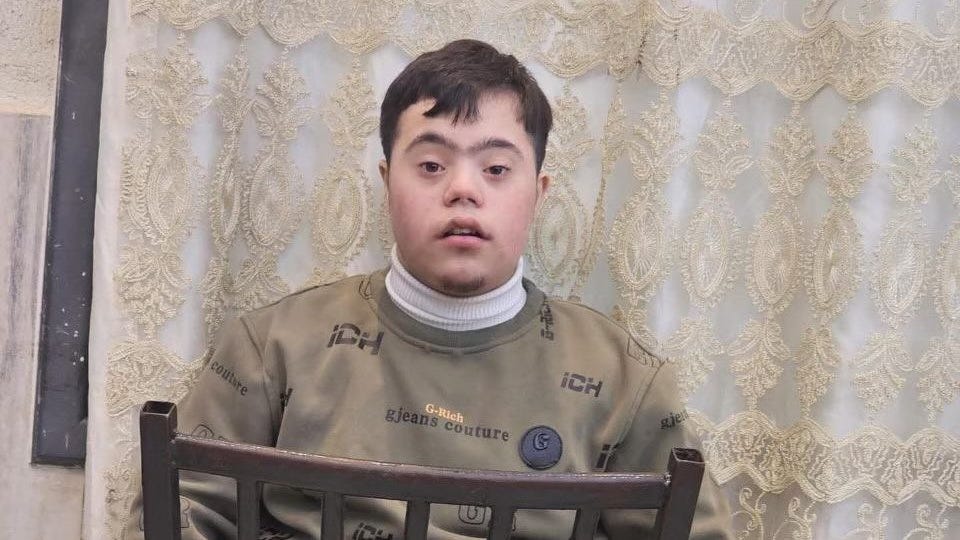
Additionally, IDF forces arrested five Palestinian children near the Havat Ma’on settlement south of Hebron while they were gathering wild plants. Local reporting indicates that the arrests followed incitement by settlers, suggesting a pattern in which settler activity and military enforcement are closely linked.
Reports also indicate that an Israeli reservist opened fire toward Palestinian homes while intoxicated, raising concerns about discipline and oversight within military units operating in civilian areas.
The repeated targeting of Christian communities, obstruction of movement—including access to education—detention of children, increasing organization among settler groups, and limited accountability for both settlers and soldiers point to a system in which instability is no longer incidental, but embedded in the conditions shaping life on the ground.
Gaza
Developments in Gaza this week reinforce a pattern in which the ceasefire remains in place formally but no longer functions as a mechanism of restraint. Military operations, territorial expansion, and pressure on civilians are continuing simultaneously, suggesting that the current phase is not transitional, but structural.
Israeli strikes continued across multiple areas throughout the week, resulting in sustained civilian casualties. On April 26, at least 12 Palestinians were killed in strikes across Gaza City, Beit Lahiya, and Khan Younis. On April 28, an airstrike targeting a vehicle west of Gaza City killed three people. This forms part of a broader pattern of vehicle-targeted strikes, often occurring in populated areas and resulting in civilian deaths. Additional strikes the same day killed multiple civilians, including a child.
This pattern continued in the following days. According to Al Jazeera, Israeli strikes killed at least three Palestinians in northern Gaza, reinforcing the near-daily frequency of attacks. These increased attacks point to a sustained operational tempo rather than isolated violations, with strikes occurring across both northern and southern parts of the territory.
The Director-General of the Ministry of Health in Gaza reported that more than 2,600 violations by Israeli forces have been recorded since the start of the ceasefire. While Israel disputes aspects of such reporting, the figure reflects the consistency and volume of incidents observed on the ground and supports the broader assessment that the ceasefire is not functioning in practice.
Israel has simultaneously expanded its physical control over Gaza. Updated maps show that Israeli forces now control nearly two-thirds of the territory, extending beyond areas agreed to under the October ceasefire. This expansion fragments Gaza into increasingly disconnected zones, restricting civilian movement and access to essential services.
The combination of territorial expansion, repeated strikes, and restricted movement points to a pattern of consolidation and containment. Control over land is increasing, while civilians are being confined within increasingly constrained spaces, with limited ability to move within Gaza or leave it.
Parallel diplomatic efforts continue under the Board of Peace framework, which centers on the demilitarization of Hamas as a condition for reconstruction, expanded aid, and Israeli withdrawal. However, these proposals remain unresolved. As a result, there is a growing disconnect between diplomatic planning and conditions on the ground: while governance and reconstruction are being discussed, military operations and civilian hardship continue.
In this context, the ceasefire functions less as a pause in hostilities and more as a framework within which ongoing operations are taking place. The developments of the past week suggest that Gaza is not moving toward de-escalation, but toward a more entrenched reality defined by sustained military pressure, expanding territorial control, and restricted civilian movement.
Nigeria
In northeastern Nigeria, suspected Islamic State West Africa Province (ISWAP) militants carried out a deadly attack in Adamawa State, killing at least 29 people. The assault took place at night in the Gombi area and targeted civilians gathered in a community setting. Witnesses reported that the attackers opened fire indiscriminately, causing panic and forcing residents to flee. Authorities confirmed that the perpetrators were linked to extremist networks operating in the region and that responsibility for the attack had been claimed.
In central Nigeria, another incident underscores the ongoing threat of mass abductions. Gunmen attacked an orphanage in Lokoja, Kogi State, abducting 23 children from the facility. The orphanage, located in a remote area, was particularly vulnerable due to limited security presence and delayed response capacity. Security forces have since rescued approximately 15 of the children, but efforts to locate the remaining victims are ongoing.
While not a new incident, the continued captivity of religious figures remains an important indicator of ongoing insecurity. Rev. Fr. Nathaniel Asuwaye of the Diocese of Kafanchan, who was abducted in February 2026 during a night attack on his residence along with approximately 10 others, remains in captivity months later, according to church sources. His continued detention underscores the prolonged nature of such abductions and the limited success of recovery efforts in some cases.
 | A guest post by
|
 | A guest post by
|