WEEKLY SITUATION REPORT
Date: June 1, 2026 Regions: Middle East (Lebanon, Israel, West Bank, Gaza, Syria) | Africa (Nigeria, Sudan) | South Asia (India) Reporting Organization: Vulnerable People Project (VPP)


Executive Summary
This week, the distance between ceasefire and lasting peace widened across the Levant, and any prospect of a formal U.S.-Iran accord has become increasingly difficult to envision.
A UN ceasefire framework governs Gaza while Israeli soldiers describe it, on the record, as “a joke.” The architecture of conflict management is intact. The conflicts are not being managed.
Lebanon is in a parallel situation.
Israel issued forced displacement orders for nearly 50 towns and the city of Nabatieh within a single 10-hour window during Eid al-Adha, struck a Beirut suburb the day before ceasefire talks opened in Washington, and confirmed ground forces advancing north of the Litani toward Nabatieh’s outskirts — a crossing of the historical red line in any discussion of Israeli operations in Lebanon. France this week requested an emergency meeting of the UN Security Council on Lebanon, a signal that European patience with the current framework is reaching its limit. UNICEF reported 11 children killed or wounded every day in Lebanon over the past week. The WHO documented 27 attacks on healthcare facilities since the April ceasefire took effect.
In Gaza, the ceasefire has been exposed from the inside. An Associated Press investigation published May 30 gathered testimony from Israeli soldiers who served during the ceasefire period — soldiers who described a standing order to shoot anyone crossing the vague, shifting “yellow line” dividing Israeli-controlled and Palestinian areas, uncertainty about where that line actually ran, and units celebrating the killing of Palestinian civilians in vehicles near the zone. “To call it a ceasefire is a joke,” one soldier said. “We need to stop using this term.” The cumulative death toll since October 7, 2023 has now reached 72,938 killed and 172,919 wounded. Netanyahu declared this week he had ordered forces to seize 70 percent of Gaza. The chief nurse of Al-Aqsa Martyrs Hospital was killed by a drone strike meters from the facility where he worked.
The week’s most significant legislative development received almost no public attention. Section 224 of the House’s 2027 National Defense Authorization Act proposes military integration between the U.S. and Israel — joint weapons production, shared AI and quantum research, network integration and data fusion between the two militaries — at a level exceeding any arrangement Washington maintains with NATO allies. It passed the House Armed Services Committee with bipartisan support and no meaningful public debate. Institutional capture does not always announce itself. Sometimes it moves through a defense bill.
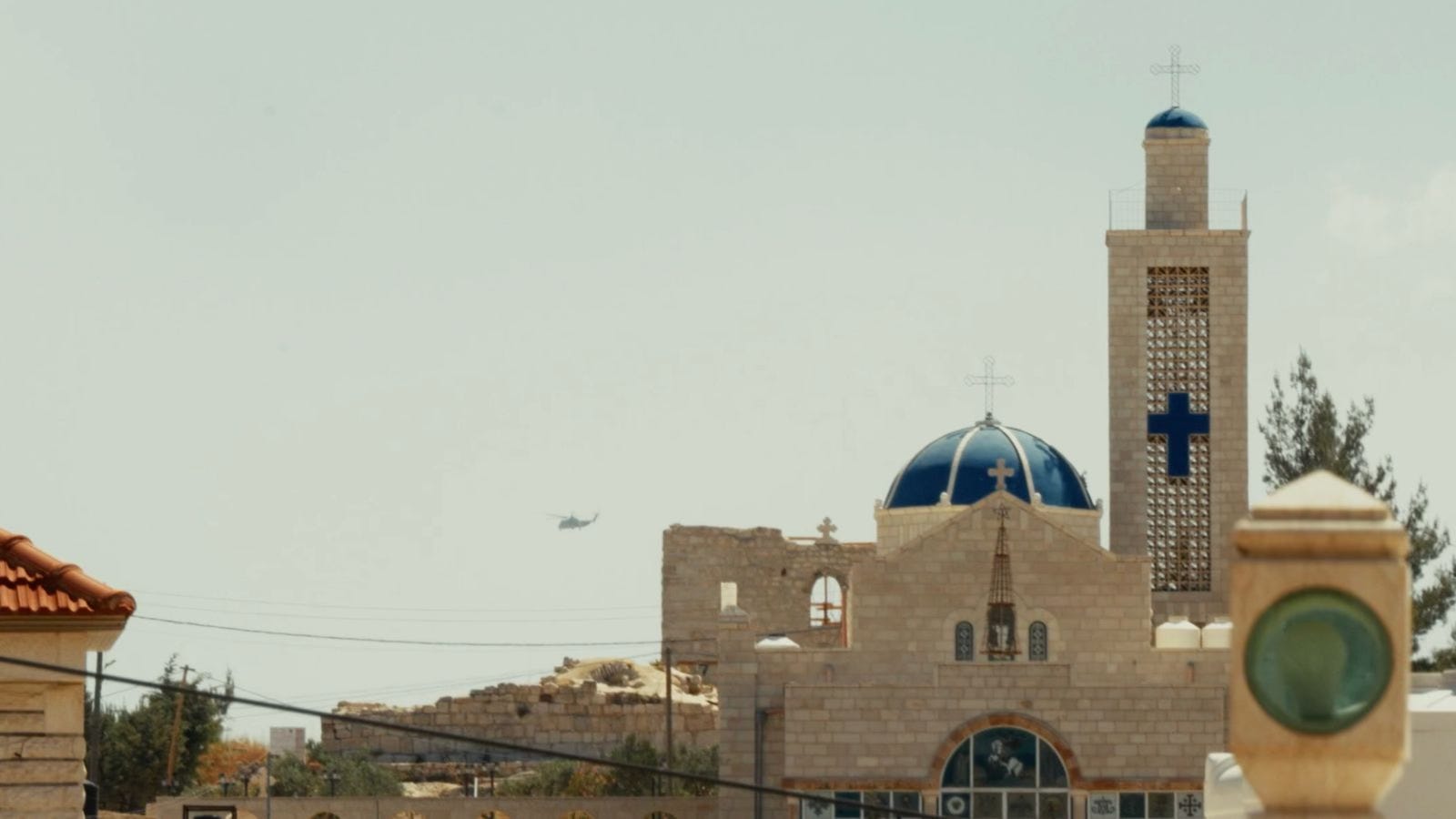
VPP was on the ground in the West Bank this week — present in Taybeh on May 29, where Israeli military forces attempted to halt a permitted Catholic Marian Festival before Cardinal Pizzaballa’s personal intervention secured permission for the celebration to proceed, and shown the continued expansion of the Shdema settlement in Beit Sahour, where Palestinian Christian families have not been expelled but have emigrated — choosing diaspora over the slow suffocation of life under settler pressure.
Beyond the Middle East: in Nigeria, the 46 hostages from the Oriire school abductions remain in captivity sixteen days on, with a teacher dead, a two-year-old among the missing, and a teachers’ union strike now shutting schools statewide. In Sudan, RSF forces killed 27 civilians during Eid al-Adha while drone warfare continues to shutter churches across the country. In India, 180 Christian families across 32 villages are being denied water as collective punishment for refusing to renounce their faith.
The defining arch of this week’s report is Israeli impunity, in all areas, unless US diplomatic or strong international pressure is asserted. As was seen with Cardinal Pizzaballa’s intervention in the West Bank allowing the Marian Festival, international pressure is the only means of protection for the Christians of the Holy Land. There is an urgency to this situation, as
legislative provisions that bind Washington’s military to Tel Aviv’s are put forth in Congress, and more and more innocent civilians die daily in Lebanon and Gaza.
Gaza
The week of May 26–June 1 brought escalating Israeli military operations across Gaza, a rising death toll, and a series of targeted killings carried out inside civilian infrastructure — all while the nominal ceasefire framework remained technically in place.
On May 26, Israeli strikes hit a building in the Rimal area of Gaza City, killing three people and wounding 20 others. Prime Minister Netanyahu announced the strike targeted Mohammed Odeh, the newly appointed leader of Hamas’s military wing. On May 27, Hamas confirmed Odeh’s death, along with the killing of his wife and two of his sons. The strike hit a residential building. Whatever the legitimacy of the military target, the civilians killed alongside him — including his family — were not.
Also this week, Israeli forces killed Jamal Yousef Abu-Oun, chief nurse at Al-Aqsa Martyrs Hospital in Deir al-Balah, in a drone strike just meters from the hospital where he worked. Healthcare Workers Watch described Abu-Oun as a senior nursing leader at one of Gaza’s most critical remaining medical facilities. The targeting of a chief nurse within striking distance of a functioning hospital is not incidental — it is part of a documented pattern of attacks on Gaza’s healthcare system that has left only a fraction of the territory’s medical infrastructure operational.
On May 28, Netanyahu publicly declared he had ordered Israeli forces to seize 70 percent of the Gaza Strip — up from the roughly 60 percent already under Israeli military control. The announcement generated concern from Germany and other European governments, who warned against permanent division of the enclave. For the nearly two million Palestinians already compressed into shrinking areas of the Strip, the announcement was not diplomatic language — it was a description of the geography they are being forced into.
The Palestinian Health Ministry reported this week that the cumulative death toll since October 7, 2023, has risen to 72,938, with 172,919 Palestinians wounded. The dead include 270 journalists and media workers, over 560 humanitarian aid workers, and a healthcare workforce that has been systematically targeted throughout the conflict.
Twenty-nine Palestinians were killed in Gaza during the three days of Eid al-Adha — the Islamic holiday of sacrifice, when families across the Muslim world gather to pray, slaughter livestock, and share meals. In Gaza, the holiday was marked by drone strikes and airstrikes on residential areas, displacement camps, and civilian gatherings. There was no pause. There was no humanitarian window. While the rest of the world observed a religious holiday, Gaza’s civilians were burying their dead.
The most damning testimony of the week came not from Palestinian survivors or human rights monitors, but from Israeli soldiers themselves. An Associated Press investigation published May 30 gathered accounts from three Israeli reservists deployed in Gaza between October 2025 and January 2026 — soldiers who spoke anonymously, fearing ostracism, but compelled to speak by what they had witnessed.
Their accounts are unambiguous. After the ceasefire took effect, the standing order was: if someone crosses the yellow line dividing Israeli-controlled and Palestinian areas of Gaza, shoot them. The problem was that no one clearly knew where the yellow line ran. Its boundaries were vague, shifting, and inconsistently communicated — leaving Palestinian civilians, including children, at lethal risk simply for moving through their own territory. AP independently documented shootings of civilians, including children playing, near the line.
One soldier described watching his unit celebrate after striking a vehicle of Palestinians driving near the Israeli-controlled zone, killing everyone inside. He said such scenes had become routine. “It was a jungle,” he told AP. “After the ceasefire, the order was: if someone crosses the line, you shoot them.”
The soldiers’ verdict on the framework was categorical. “To call it a ceasefire is a joke,” one said. Another went further: “We need to stop using this term. It’s not serving people that want to stop the war.”
This testimony matters beyond its immediate shock value. It is confirmation from inside the institution that the ceasefire has functioned as a semantic arrangement rather than a protective one — a framework that managed international perception while killings continued on the ground.
In the final days of this reporting period, an Israeli strike hit a camp for displaced families in Khan Younis, killing Hanan Abdel Nasser Mahmoud and six-year-old Minat Allah Nabil Abu Labda, and wounding 17 others. They were not combatants. They were sheltering — already having fled violence elsewhere in the Strip — and they were killed in the place they had gone for safety.
Gaza is no longer a postwar situation. It is an active war being managed under the language of ceasefire. The soldiers who fought in it are now saying so themselves.
Lebanon
Israel carried out airstrikes across southern Lebanon’s Nabatieh governorate during Eid al-Adha this week, killing at least three people and wounding 11 others in separate attacks — while ceasefire negotiations between Israeli and Lebanese delegations were simultaneously underway in Washington. The timing was not incidental. It was the posture.
Israel declared all areas south of Lebanon’s Zahrani River as “combat zones” and issued sweeping evacuation orders as families attempted to observe the holiday. The IDF framed the operations as responses to Hezbollah violations. Lebanon’s government and Hezbollah disputed the characterization.
The day before Washington talks began, Israel struck an apartment building in a southern suburb of Beirut. The State Department described those talks as “highly productive” and announced the ceasefire would be extended by 45 days, with negotiations to reconvene June 2–3. A new military-to-military communication channel, overseen by the Pentagon, was also announced.
The gap between the diplomatic language and the operational reality could not be starker. Negotiations extend the ceasefire; strikes continue regardless. Israel issues evacuation orders framed as humanitarian warnings; families celebrating Eid flee their homes. Washington brokers talks and simultaneously oversees military coordination channels that exist precisely because strikes have not stopped.
Iran has made clear that any final agreement with the U.S. must include a halt to fighting on all fronts, including Lebanon. Israel has made equally clear it intends to preserve freedom of military action inside Lebanese territory regardless of any broader regional arrangement. For Lebanon’s civilians, the ceasefire framework has functioned less as protection than as a diplomatic roof under which the war continues at a manageable temperature — until it doesn’t.
The scale of civilian harm is no longer abstract. UNICEF reported on May 29 that an average of 11 children have been killed or wounded every 24 hours in Lebanon over the past week — 77 children in seven days. Since the April ceasefire took effect, 55 children have been killed and 212 wounded. The WHO documented 27 attacks on healthcare facilities since the ceasefire began, resulting in 25 deaths and 42 injuries, with 16 hospitals and 13 primary healthcare centers damaged. A ceasefire that produces these numbers is not functioning as a ceasefire.
Within a single 10-hour window this week, Israel issued forced displacement orders for nearly 50 towns, villages, and the city of Nabatieh across southern and eastern Lebanon, warning all residents to flee north of the Zahrani River ahead of planned strikes. The breadth and speed of the orders left communities with hours to evacuate — during a religious holiday, across roads that have been repeatedly bombed throughout the conflict.
Israel carried out extensive attacks on the city of Tyre this week — Lebanon’s fourth-largest city and a Mediterranean coastal hub that tens of thousands had already fled to from areas further south. Israeli forces issued forced displacement warnings for eight specific buildings and surrounding neighborhoods in Tyre before striking them overnight, killing at least 14 people and wounding dozens. Refugees who had already fled from villages further south found themselves fleeing again, cramming roads northward as the strikes expanded.
Netanyahu declared publicly that a large Israeli ground force was pushing deep into southern Lebanon to seize areas and “fortify” what he described as a “security zone.” The Israeli military said it struck more than 100 Hezbollah sites across southern Lebanon and the eastern Bekaa Valley overnight, including the strategic Qaraoun Dam. A strike south of Beirut — the first on the Lebanese capital in three weeks — killed a woman and two children. A Lebanese army soldier was killed in a separate Israeli strike in the Nabatieh area.
Tyre matters beyond its casualty count. It is one of the ancient world’s great Christian cities — home to one of the earliest Christian communities, visited by the Apostle Paul, and a seat of early church history. Its population today is predominantly Shia Muslim, but the city’s Christian heritage and its historic churches sit within the geography of an active Israeli bombardment campaign. The displacement of Tyre’s remaining population and the destruction of its urban fabric is not only a humanitarian crisis — it is the erasure of one of the Middle East’s most historically layered cities under conditions the international community has so far declined to halt.
A Lebanese military source confirmed this week that Israeli forces have advanced north of the Litani River and reached the outskirts of Nabatieh — placing Israeli ground forces well beyond the buffer zone envisioned under the ceasefire framework. The Litani River has historically been the red line in international discussions of Israeli operations in Lebanon; crossing it and approaching a major Lebanese city is not a tactical adjustment. It is a statement of intent.
The cycle of strikes and reprisals continued into the final days of the reporting period. Hussein Wehbi, a young paramedic affiliated with Hezbollah-linked rescue services, was killed responding to an Israeli airstrike in Ansar, with four others wounded. Hours later, Hezbollah struck an Israeli position near Zawtar al-Sharqiyah with a drone, killing Staff Sgt. Michael Tyukin — a Ukrainian immigrant who had moved to Israel six years ago — and lightly wounding four others. His death brought the Israeli military toll to 13 soldiers killed since the April 16 ceasefire took effect.
Both sides accused the other of violations. Both are correct. The ceasefire has not stopped the war — it has formalized the conditions under which it continues. Over 130 Lebanese healthcare workers have now been killed or wounded since the conflict began. These are not the statistics of a war winding down. They are the statistics of a war being administered.
Israel
The most significant development in the U.S.-Israel relationship this week did not involve a weapons transfer, a diplomatic statement, or a military operation. It was buried in a legislative document — and the people warning loudest about it are not fringe voices. They include a Democratic senator and a Republican congressman who paid for his criticism of the Israeli state with his congressional seat.
Section 224 of the House’s 2027 National Defense Authorization Act — titled the “United States-Israel Defense Technology Cooperation Initiative” — was advanced this week with bipartisan backing from the House Armed Services Committee. It was proposed jointly by the committee’s Republican chairman, Mike Rogers, and its most senior Democrat, Adam Smith. In a Congress sharply divided on nearly everything, Section 224 has the full support of both parties’ senior defense leadership. It has received almost no public attention.
What Section 224 actually does: The provision lays the groundwork for bilateral research and development across AI, quantum computing, autonomous systems, directed energy, cyber, and biotech. It authorizes co-production of weapons systems, joint ventures, and licensing agreements across virtually every domain of future warfare technology. It envisions “network integration” and “data fusion” between the two militaries — meaning U.S. military data infrastructure would become accessible to Israeli defense systems. And it requires the U.S. Secretary of Defense to designate a single “executive agent” — a dedicated Pentagon official — whose sole job is to coordinate and synchronize military cooperation between Washington and Tel Aviv across all of these domains simultaneously.
To understand what this represents, consider what already exists. The United States has provided Israel with an inflation-adjusted $200 billion in military assistance since 1948 — more than any other country in history. The two militaries already cooperate extensively on missile defense. Israel is the only non-NATO country with a formal pre-positioned U.S. weapons stockpile on its soil. And yet analysts at the Quincy Institute’s Responsible Statecraft program argue Section 224 would do more to intertwine the two militaries than all of that combined — because it shifts the relationship from financial assistance to structural fusion.
The distinction matters enormously. Aid can be conditioned, reduced, or suspended. Integration cannot. Once U.S. and Israeli defense industries are jointly producing weapons, sharing AI systems, fusing data networks, and operating under a dedicated Pentagon coordination office, the entanglement becomes self-reinforcing. U.S. congressional districts develop economic stakes in Israeli co-production facilities. Defense contractors embed themselves across the partnership. The relationship becomes progressively harder to scrutinize, debate, or exit — by design.
The critics: Democratic Senator Chris Van Hollen of Maryland wrote in the New York Times this week that the Democratic Party has provided “reflexive and unconditional support to Israeli governments, even as their actions have increasingly undermined American interests and values.” On the Republican side, Representative Thomas Massie of Kentucky and former Representative Marjorie Taylor Greene of Georgia have been the most prominent voices decrying what they describe as the Israeli lobby’s “corrosive influence” on U.S. policy. Their position is notable precisely because it crosses the conventional political divide — and because analysts note it may have cost both of them politically. Greene lost her seat; Massie has faced sustained pressure from pro-Israel donors and primary challengers. The implicit message to other lawmakers has been clear: public criticism of U.S.-Israel military entanglement carries career consequences.
Critics across the political spectrum warn that Section 224 risks drawing the United States deeper into Middle East conflicts, eroding American foreign policy independence, and creating a military-industrial relationship so deeply intertwined that any future administration seeking to apply pressure on Israel — over settlements, over Gaza, over West Bank annexation — would find itself structurally constrained from doing so.
The bill must still clear the full House Armed Services Committee markup in early June, then pass the House and Senate. Its bipartisan authorship gives it significant momentum. The American public has not been asked whether it supports this arrangement. Congress has not debated it. It has simply advanced — quietly, efficiently, and with the full backing of the people entrusted to oversee American defense policy.
This is what institutional capture looks like. No shots fired. No treaty debated. Just a provision advancing through a legislature that has consistently demonstrated it will not apply to Israel the standards of accountability it applies to every other country on earth — and that is now moving to make that arrangement permanent in the architecture of the American state.
West Bank
CCTV footage circulated this week showing Israeli settlers armed with sticks and Molotov cocktails storming the village of Beita — smashing vehicles, attempting to break into homes, and terrorizing families while the assault unfolded on camera. In a separate incident, settlers attacked several homes at dawn in Beita, damaging property across the town. That two documented attacks struck the same village within days of each other is not coincidence — it reflects a sustained campaign of attrition against a community that has consistently resisted settler encroachment. The footage and the dawn raids together are significant not only for what they show, but for what they confirm: this is not spontaneous mob behavior. It is organized, armed, and persistent — captured on surveillance systems that exist precisely because communities like Beita have learned to document what Israeli authorities routinely fail to prosecute.
On May 29, in Khirbet Abu Falah, Israeli soldiers set fire to agricultural lands surrounding village homes — then prevented residents from extinguishing the flames and opened fire on those who attempted to approach. The sequence is precise in its cruelty: burn the land, block the response, shoot anyone who tries to save what remains. This is not collateral damage. It is the deliberate destruction of a community’s food security and livelihood, enforced at gunpoint.
A masked Israeli settler was filmed in the village of Atara, near Ramallah, repeatedly clubbing a Palestinian family’s tied-up guard dog named Lucy in the owner’s yard. The dog had not attacked anyone — she was restrained and defenseless. Soldiers present had instructed residents to stay inside and only document. Lucy survived. What the footage illustrates is not an aberration — it is the logic of the environment made visible: settlers act, soldiers protect the conditions that allow them to act, and Palestinians are confined to watching and recording.
A Palestinian man died this week after Israeli forces shot him in the town of ar-Ram, north of occupied East Jerusalem. His death adds to a toll that, since October 2023, now includes at least 1,104 Palestinians killed by Israeli forces and settlers across the occupied West Bank and East Jerusalem, with nearly 11,000 injured and around 21,000 detained.
One of the most significant incidents of this reporting period for VPP occurred on May 29 in Taybeh — the West Bank’s last entirely Christian village, already facing settler encroachments on its land, repeated military checkpoints, and sustained pressure on its religious and civic life.
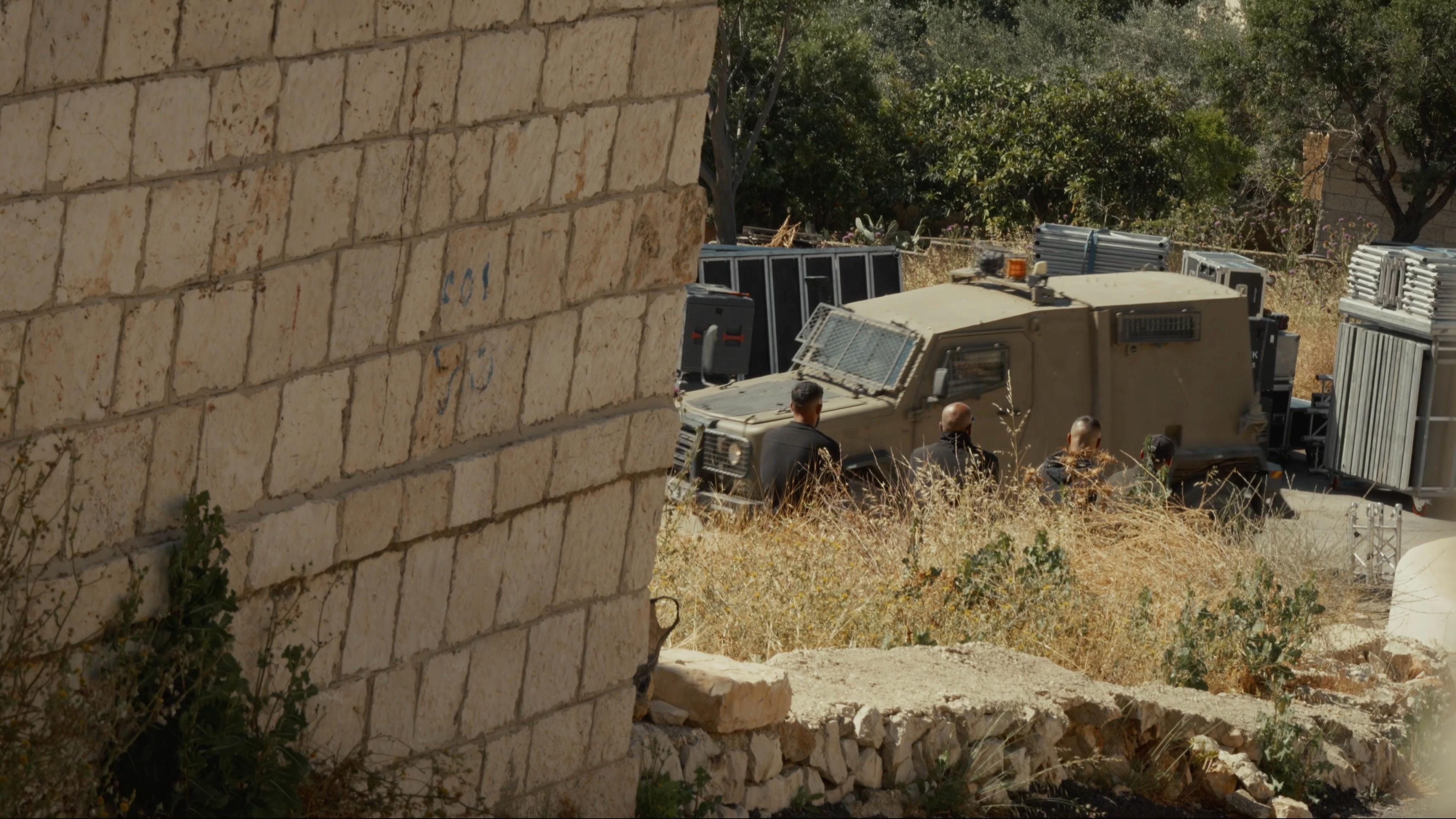
Israeli military forces attempted to halt preparations for a permitted Catholic Marian Festival in Taybeh on Friday morning, despite the event having received all necessary approvals from local authorities. Armed soldiers arrived and intervened as Christians prepared for the celebration. A stun grenade was detonated. Parish priest Fr. Bashar Fawadleh immediately contacted Church authorities, escalating the matter until it reached Cardinal Pierbattista Pizzaballa, Latin Patriarch of Jerusalem — the most senior Roman Catholic leader in the Holy Land. Cardinal Pizzaballa intervened directly with Israeli authorities. Only after those discussions did permission come through for preparations to continue. The festival was ultimately allowed to proceed.
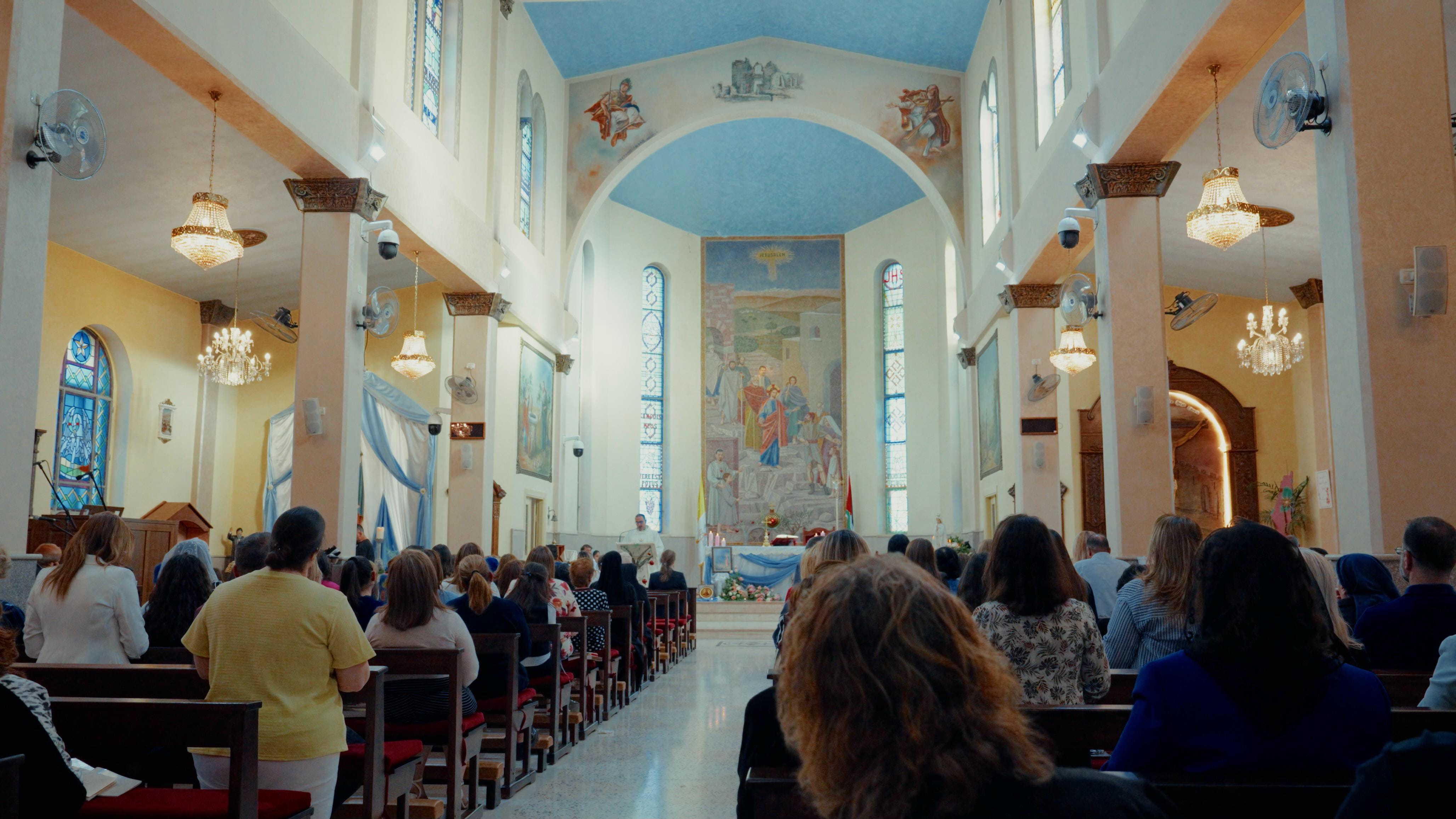
In another incident witnessed by the VPP team, an Israeli soldier was berated by his commanding officer for apologizing to residents and treating them respectfully after an altercation at the local brewery. “They don’t allow them to act like human beings,” the Palestinian involved told VPP. That a soldier was disciplined for showing basic human decency describes an institutional posture, not individual misconduct.
This was not an isolated confrontation. In March, Cardinal Pizzaballa was blocked by Israeli police from entering the Church of the Holy Sepulchre to celebrate Palm Sunday Mass — the first time in centuries the Heads of the Church were prevented from celebrating at one of Christianity’s holiest sites. The pattern is consistent: Christian religious life in the Holy Land is increasingly subject to military and administrative interference, with even the highest Church authorities required to negotiate for access that should be unconditional.
The VPP team was also shown the latest developments at the Shdema settlement in Beit Sahour during this visit — a site that was new during VPP’s last visit to the area in December 2025 and has expanded considerably since. New gates and checkpoints have been added. Additional Israeli flags now line the surrounding hillside. The physical footprint of the settlement is larger and more fortified than it was five months ago.
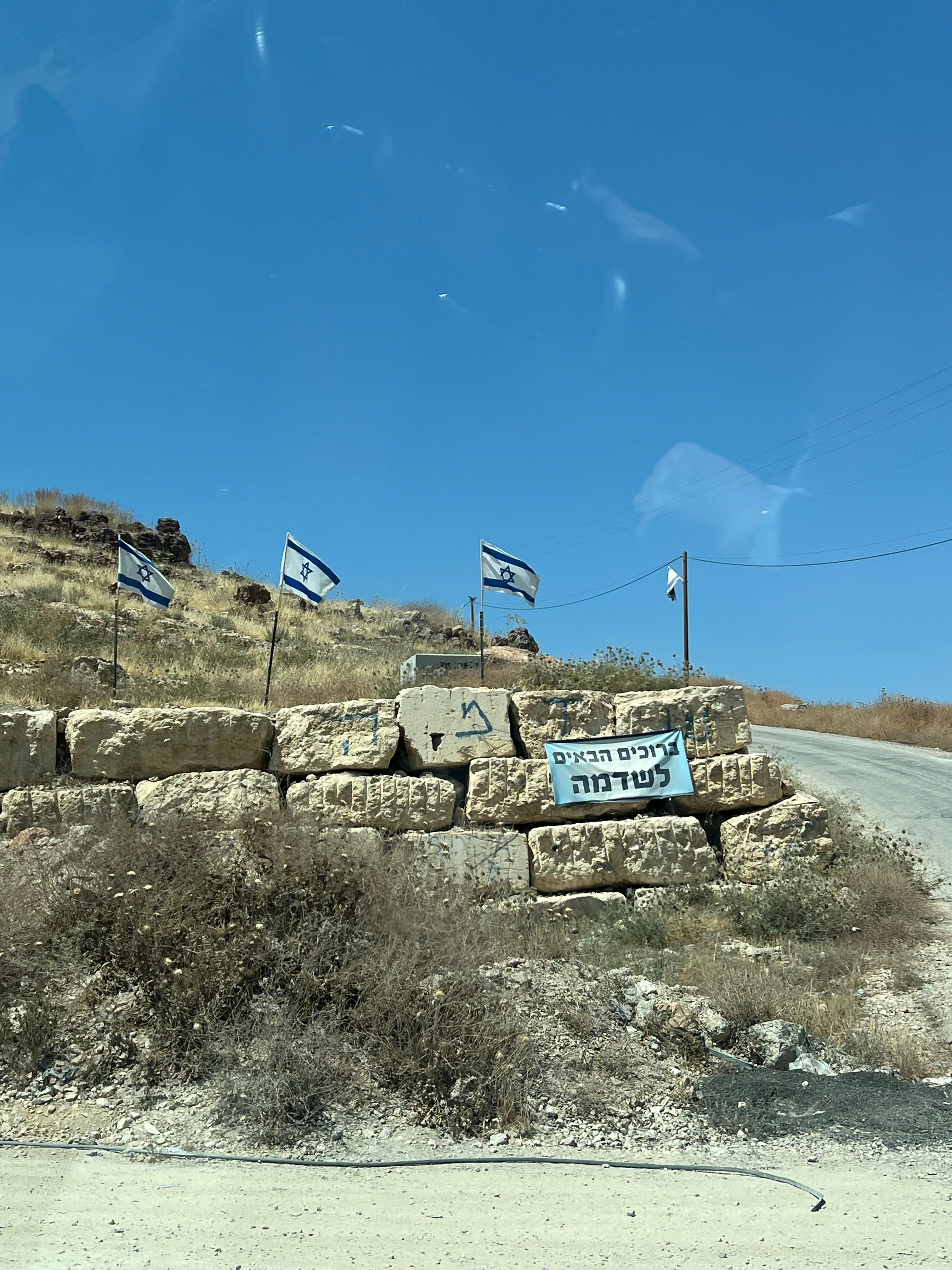
Multiple families with homes near the settlement have left since December. They are now in diaspora, having concluded that the conditions of life adjacent to an expanding settler outpost — the harassment, the land pressure, the checkpoints, the atmosphere of intimidation — made staying no longer viable. That distinction is important. This is not displacement in the conventional sense. There are no refugee camps. There are no internally displaced persons. There are simply empty homes, and families now living in Chile, the United States, Australia, or Germany who were Christian Palestinians a generation ago and are now simply Palestinians abroad.
This is the most consequential and least visible threat to the continuous Christian presence in the Holy Land- the steady, cumulative pressure of radical settler expansion — the encroachment on land, the restriction of movement, the disruption of religious celebrations, the economic strangulation of communities dependent on pilgrimage and agriculture — that makes ordinary Christian life in the West Bank progressively less livable until families make the rational decision to leave. Each family that emigrates makes it slightly easier for the next family to follow and there is a fear that the Christians of the Holy Land will become a mere memory in the not so distant future without international pressure to stop the expansion of radical settler groups and increasing settlements.
Syria
Israeli forces launched new incursions into southern Syria this week, entering parts of Quneitra and Deraa provinces — extending Israeli military presence deeper into Syrian territory beyond the Golan Heights buffer zone. The incursions follow a pattern of incremental expansion that has accelerated since the fall of the Assad government.
Quneitra and Deraa are not uninhabited buffer territory. They are populated provinces with functioning communities, agricultural land, and civilian infrastructure. Residents report damage to farmland from trench construction and fortifications, expanding checkpoints, and restrictions on civilian movement — the same incremental pressure visible in the West Bank, applied now to a neighboring country whose new government lacks the capacity to resist it.
The pattern emerging across southern Syria mirrors what analysts have documented in Gaza and the West Bank: temporary incursions that do not end, security zones that expand, and civilian populations that find their geography slowly reorganized around them. Syria’s transitional government has condemned the incursions. The international response has been minimal.
Nigeria
Sixteen days after gunmen abducted 46 people from three schools in Oriire Local Government Area of Oyo State, the hostages remain in captivity — and the crisis deepened significantly across this reporting period.
The attack occurred on May 15, when approximately 12 gunmen on six motorcycles, dressed in military camouflage and communicating in Yoruba, Hausa, and Pidgin, stormed Community Grammar School, Baptist Nursery and Primary School, and L.A. Primary School in the Esiele and Yawota communities near Ogbomoso at approximately 8:00–9:00 a.m. They abducted 39 pupils and 7 teachers — 46 victims in total. The youngest is two-year-old Christianah Akanbi, taken from the Baptist nursery alongside her mother, teacher Mary Akanbi. A mathematics teacher, Michael Oyedokun, was killed in captivity two days after the abduction. A motorcyclist was killed during the attack. A security personnel died after running into IEDs planted by abductors to disrupt early rescue attempts.
This week, the human reality of what those 46 people represent broke through the institutional language surrounding the crisis. Mary Akanbi’s husband filmed himself pleading with the abductors to take him instead — to release his wife and their 18-month-old baby. That video circulated widely and generated significant reaction across Nigeria. It did not secure their release.
The Nigeria Union of Teachers declared an indefinite strike across Oyo State on May 31, directing all public primary and secondary school teachers, headteachers, and principals to withdraw their services immediately until the hostages are returned. The union had previously warned authorities repeatedly about the deterioration of school security in the region; those warnings went unheeded.
On May 31, President Tinubu dispatched a high-powered delegation to the affected communities, led by Chief of Staff Femi Gbajabiamila and National Security Adviser Nuhu Ribadu. The delegation informed community leaders that their request for a military base in the area had been transmitted to the President for consideration. The visit came sixteen days after the abductions. The communities received the delegation’s assurances with visible exhaustion.
Oyo Governor Seyi Makinde visited affected families on May 30. “There is nowhere in Nigeria where we have seen this sort of situation where nursery and primary school students are kidnapped,” he said. “If it were secondary school students, we have heard that before, but to abduct nursery and primary school pupils is strange.” Six suspects have been arrested. A joint rescue operation remains active in the field, impeded by IEDs.
Meanwhile, Oyo police dismissed panic videos showing students and residents fleeing in Ogbomoso amid reports of a second attack. Police denied a new attack had occurred. The denial itself is significant: the abduction has so traumatized surrounding communities that footage of ordinary crowd movement triggers mass panic and flight.
The three schools attacked included a Baptist nursery and primary school. The families waiting include Christians whose churches, schools, and communities have been part of Oyo State’s social fabric for generations. Sixteen days later, with a mathematics teacher dead, a two-year-old among the missing, and a husband begging for his wife and infant on camera, they are still waiting.
Sudan
Sudan’s civil war produced a specific and documented atrocity this week. On May 29, RSF-affiliated forces attacked civilians in central Sudan during Eid al-Adha — targeting an area with no military presence — killing 27 people, among them elderly men and women. RSF forces struck during a major Muslim holiday, in a zone free of combatants, killing people too old to flee. The attack generated no significant international response.
The same week, CBN’s Christian World News documented continued targeting of churches across Sudan, with Christians beaten by soldiers and church buildings destroyed — part of a pattern that has now shuttered at least 165 churches across the country since the war began in April 2023.
On May 31, the Sudanese Armed Forces announced they had shot down a long-range RSF drone over White Nile state following a series of aerial attacks on towns in the region. SAF forces also launched drone strikes on RSF positions in North Kordofan. The drone war — waged by both sides against civilian areas, markets, hospitals, convoys, and churches — has become the defining tactical signature of a conflict the international community continues to describe as a crisis while declining to halt.
Sudan has passed the 1,000-day milestone of this war with 150,000 people reportedly killed and more than 13 million displaced. An estimated 2 million Christians are caught in the conflict. Sudan ranks fourth on Open Doors’ 2026 World Watch List. A UN fact-finding mission has concluded that RSF operations around El-Fasher bear the hallmarks of genocide. The ICC has opened a formal probe. The UNSC imposed sanctions on four RSF figures in February. None of it has stopped the killing.
For Sudan’s Christians — who have lived in this land since the first century — the war has meant burned churches, beaten congregants, forced displacement, and the steady erasure of a community whose presence predates Islam in the region by centuries. The silence of the international community is not ignorance. It is a choice, and it has consequences that will outlast whatever political settlement eventually ends this war.
India
Two documented incidents from within this reporting period illustrate the range of tactics deployed against Christians in India — from lethal violence to slow economic suffocation.
On May 27, reporting emerged confirming that three pastors had been killed returning from a peace conference. In the hours following those killings, armed groups launched a separate wave of kidnappings targeting Christians in the same region. The murders and abductions were reported by persecution-monitoring organizations and largely ignored by mainstream outlets.
On May 29, International Christian Concern documented that more than 180 Christian families across 32 villages in Chhattisgarh’s Kanker district have been denied access to communal water sources and livelihood opportunities for three consecutive weeks — as collective punishment for refusing to renounce their faith. The denial of water is not mob violence. It is a sustained, organized campaign of economic pressure designed to make Christian life materially impossible in communities where access to shared resources is existential. The families have refused to leave their faith. The punishment continues.
Together these two incidents reflect the breadth of the anti-Christian campaign across BJP-governed states: overt lethal violence against clergy on one end, slow grinding economic isolation of entire communities on the other. Both serve the same goal — the elimination of Christian presence from communities where Hindu nationalist groups have decided it does not belong.
India ranked 12th on Open Doors’ 2026 World Watch List — up from 31st in 2013, before Modi came to power. Thirteen states have enacted anti-conversion laws that function in practice not as protections against coercion but as legal instruments empowering mobs: when Hindu extremists storm a church service, it is the pastor who is arrested. USCIRF has recommended the State Department designate India a Country of Particular Concern. The State Department has not done so. Secretary Rubio’s visit to New Delhi — which included a symbolic stop at Mother Teresa’s tomb in Kolkata — raised no public concerns about any of this. Washington’s strategic interests in the Quad and Indo-Pacific alignment take precedence. For India’s Christians, the message has been consistent and clear: you are on your own.
 | A guest post by
|
 | A guest post by
|